
Originally written by Adnan Ahmed, updated by Dibyajyoti Kabi. First published July 10, 2017. Updated October 24, 2026.
To enable USB debugging, open Settings > About phone, tap Build number seven times to turn on Developer options, then go to Developer options and turn on USB debugging. OEM unlocking sits in the same menu, but some phones hide it or grey it out.
The exact menu path is different on Samsung, Pixel, Xiaomi, OnePlus and Motorola phones, so I put every one of them in a table below. I also cover Wireless debugging and what to do when OEM unlocking won’t turn on.
Key points
- Developer options is hidden until you tap Build number (or OS version on Xiaomi) seven times.
- USB debugging lets your PC send ADB commands to the phone. You need it for ADB, app sideloading and most root guides.
- OEM unlocking only allows the bootloader to be unlocked. It doesn’t unlock anything by itself.
- On Samsung phones, Auto Blocker blocks USB commands and has to be off before ADB works.
- Reports from July 2025 say One UI 8 removed the OEM unlocking toggle on Galaxy phones. Samsung hasn’t confirmed it.
How do I turn on Developer options?
Open Settings > About phone and tap Build number seven times. Enter your PIN when the phone asks, and you’ll see “You are now a developer”. Developer options then shows up in Settings, usually under System, or at the bottom of the main Settings list on Samsung phones.
Here’s where Build number and Developer options live on the most common phones.
| Phone | Tap seven times | Where Developer options appears |
|---|---|---|
| Samsung Galaxy (One UI) | Settings > About phone > Software information > Build number | Settings > Developer options (at the bottom) |
| Google Pixel | Settings > About phone > Build number | Settings > System > Developer options |
| Xiaomi, Redmi, POCO (HyperOS) | Settings > About phone > OS version | Settings > Additional settings > Developer options |
| OnePlus (OxygenOS) | Settings > About device > Version > Build number | Settings > System and updates > Developer options |
| Motorola | Settings > About phone > Build number | Settings > System > Developer options |
If you can’t find the menu, type “Developer options” in the search bar at the top of Settings. That works on every one of these phones. Google’s own Developer options page lists the paths for older Android versions too.
How do I enable USB debugging?
Open Developer options, scroll to the Debugging section and turn on USB debugging, then tap OK. Connect the phone to your PC with a USB cable, unlock the screen and tap Allow on the “Allow USB debugging?” prompt. Tick “Always allow from this computer” if it’s your own PC.
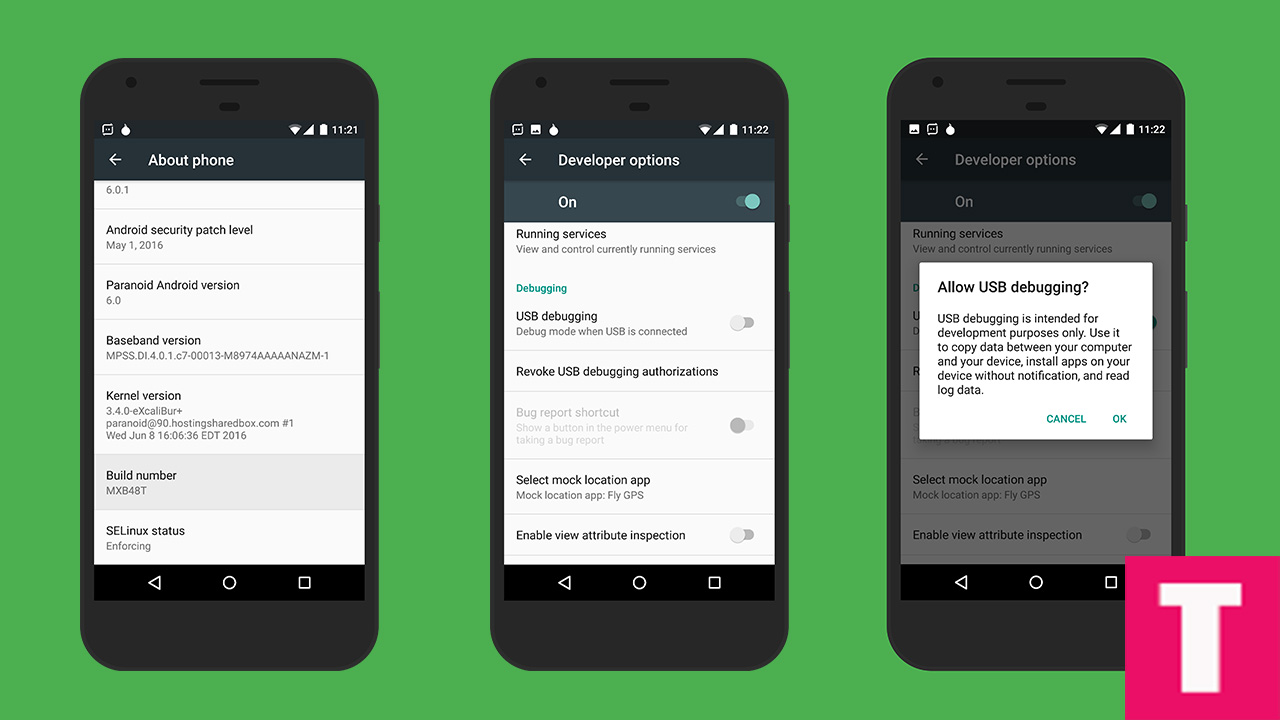
To check that it works, open a command window in your ADB folder and run this:
adb devicesYou should see your phone’s serial number followed by “device”. If it says “unauthorized”, look at the phone screen and accept the prompt. If nothing shows at all, install the USB driver for your phone and try a cable that carries data.
Don’t have ADB yet? My guide on Minimal ADB and Fastboot shows you how to set it up on Windows.
Why doesn’t ADB work on my Samsung phone?
Samsung’s Auto Blocker blocks commands sent over a USB cable, so ADB can’t reach the phone while it’s on. Go to Settings > Security and privacy > Auto Blocker and turn it off, then enable USB debugging again. Turn Auto Blocker back on when you’re done.
According to Samsung’s Auto Blocker page, the feature is on by default on Galaxy devices that launched with One UI 6.1.1. It also blocks apps from outside the Galaxy Store and Play Store, which is why sideloading fails while it’s on.
There’s more. Samsung’s Maximum restrictions mode in Auto Blocker also blocks USB debugging on some models, so check that setting too if the toggle still won’t stay on.
How do I use Wireless debugging?
Wireless debugging lets you run ADB over Wi-Fi without a cable, on Android 11 and newer. Turn on Wireless debugging in Developer options, tap it, then tap Pair device with pairing code. On your PC, run adb pair with the IP address, port and code the phone shows.
Your phone and PC have to be on the same Wi-Fi network. Here’s how it goes.
- Open Developer options and turn on Wireless debugging.
- Tap Wireless debugging, then tap Pair device with pairing code.
- On your PC, run
adb pair 192.168.1.20:37099using the IP address and port from the pairing screen, then type the six-digit code. - Go back to the main Wireless debugging screen and note the IP address and port shown there. It’s a different port from the pairing one.
- Run
adb connect 192.168.1.20:41235with that address. - Run
adb devicesto check the phone is listed.
You’ll need a recent version of the Android SDK Platform Tools for adb pair to work. Older ADB builds don’t know the command.
How do I enable OEM unlocking?
Open Developer options and turn on OEM unlocking, then confirm with your PIN. This only gives permission to unlock the bootloader. You still have to unlock it with fastboot or the phone maker’s tool, and that step wipes the phone.
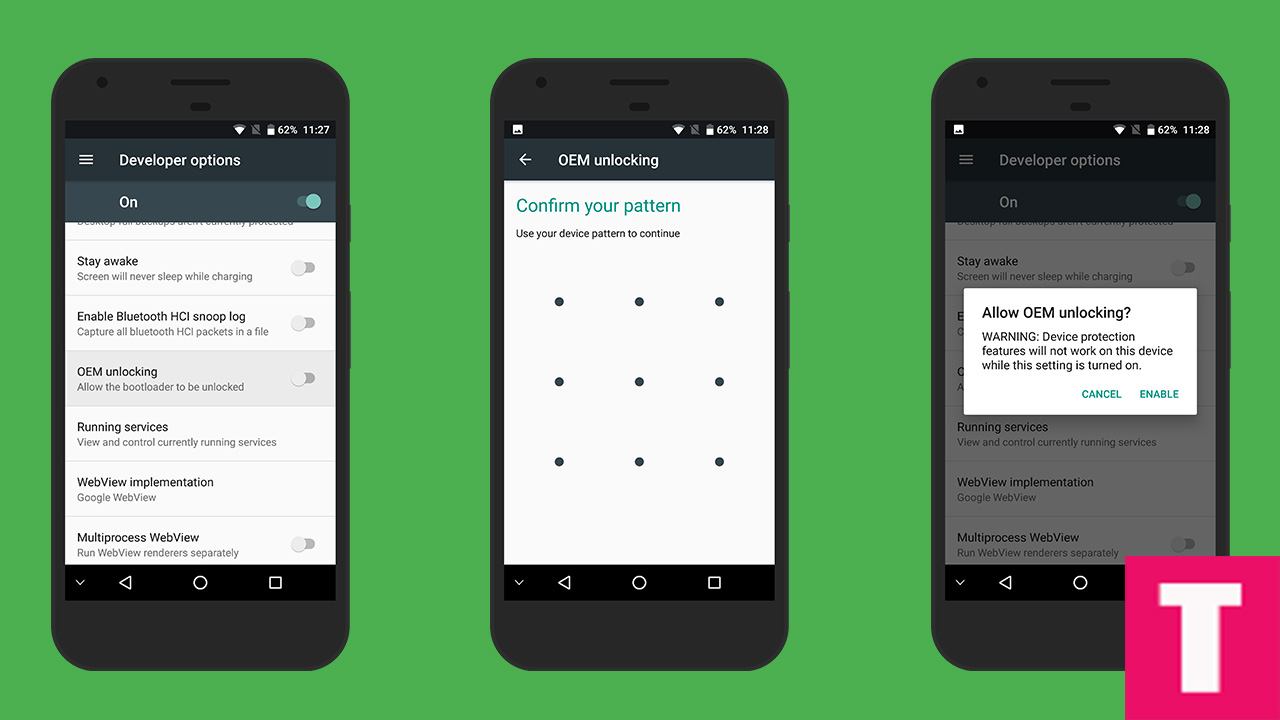
On a Pixel, the next step is fastboot flashing unlock from the bootloader screen. On Samsung phones that still have the toggle, you unlock from Download mode instead. Xiaomi phones need the Mi Unlock tool.
Unlocking the bootloader is what lets you install TWRP, Magisk and custom ROMs. My guide on installing custom ROMs with TWRP picks up from there.
Why is OEM unlocking greyed out or missing?
OEM unlocking is greyed out when the phone is carrier locked, still checking in with the maker’s servers, or a model the maker never allows to unlock. Connect to the internet and wait a few minutes. If it stays grey, your carrier or the phone maker is blocking it, and there’s no safe way around that.
Here are the usual causes.
- The phone is carrier locked. Carrier versions of the Pixel, like Verizon models, can’t be unlocked.
- The phone hasn’t been online since setup. Connect to Wi-Fi, restart and check again.
- It’s a US Samsung Galaxy with a Snapdragon chip. Those models never had the toggle.
- It’s a Samsung phone on One UI 8. Reports say the toggle is gone on all regions. More on that below.
- It’s a Xiaomi phone. Xiaomi shows Mi Unlock status in Developer options instead, and you have to bind your Mi account there first.
Did One UI 8 remove OEM unlocking on Samsung phones?
Yes, on the phones people have checked. In July 2025, 9to5Google reported that the OEM unlocking toggle is missing on One UI 8 builds for the Galaxy S25 series, Galaxy Z Fold7 and Galaxy Z Flip7, even outside the US. Samsung hasn’t confirmed it officially.
That means if you own a Galaxy phone on One UI 8 or newer, you probably can’t unlock the bootloader, root it or install TWRP. Flashing official firmware with Odin still works, since that doesn’t need an unlocked bootloader.
If your Galaxy phone still shows “Only official released binaries are allowed to be flashed” when you flash something, my guide on Odin errors explains what that message means.
Is it safe to leave USB debugging on?
It’s safe while you’re using it, but turn it off when you’re done. With USB debugging on, any computer you’ve allowed can install apps and read data over a cable. Turn it off in Developer options, and tap Revoke USB debugging authorizations to forget every PC you allowed before.
Some banking and payment apps refuse to open while Developer options or USB debugging is on. Turning them off fixes that.
How do I hide Developer options again?
Open Developer options and switch off the toggle at the very top of the page. The menu stays in Settings on some phones, but every option in it goes back to the default. On Samsung phones, the Developer options entry disappears from Settings completely.
Clearing the Settings app’s storage also hides it on some older phones, but the toggle is the cleaner way.
FAQ
Does enabling Developer options void my warranty?
No. Developer options, USB debugging and OEM unlocking are all built into Android and don’t touch your warranty. Unlocking the bootloader is different. Some makers, including Samsung, treat an unlocked bootloader or a tripped Knox counter as out of warranty.
Does OEM unlocking wipe my phone?
Turning on the OEM unlocking switch doesn’t erase anything. The actual bootloader unlock that comes after it does, on every phone. Back up your photos, chats and files before you run the unlock command.
Why does my phone say “unauthorized” in adb devices?
Your phone hasn’t accepted the PC’s key yet. Unlock the phone screen and tap Allow on the USB debugging prompt. If the prompt doesn’t show, tap Revoke USB debugging authorizations in Developer options, unplug the cable and plug it back in.
Can I enable USB debugging with a broken screen?
Not easily. USB debugging needs you to tap through Settings and accept a prompt on the screen. If the touch screen is dead but the display works, a USB OTG mouse lets you do it. If the display is dead too, you’d need a screen repair first.
Related guides
- Download and install Minimal ADB and Fastboot
- Download USB drivers for Android
- How to remove Samsung bloatware without root
- How to downgrade an Android app without root
- How to install custom ROMs with TWRP
That’s it. Tap Build number seven times, turn on USB debugging, and only touch OEM unlocking when you’re ready to unlock the bootloader.
Toggle still greyed out or ADB still not seeing your phone? Leave a comment with your phone model (like SM-S938B or Pixel 9 Pro) and what you see in Developer options, and I’ll help you figure it out.