


Originally written by The Droid Guru Staff, updated by Dibyajyoti Kabi. First published June 19, 2017. Updated October 24, 2026.
If your custom ROM runs Android 11 or newer, download MindTheGapps or NikGapps. Open GApps stopped at Android 11, so it only makes sense for older ROMs like Android 10, Pie, Oreo, Nougat, Marshmallow and Lollipop.
Pick the package that matches your ROM’s Android version and your phone’s CPU type (ARM64 on almost every phone from the last few years), then flash it right after the ROM, before the first boot.
This page used to be a big list of Open GApps links for Lollipop to Oreo. I rewrote it so it covers every Android version from 5.1 up to Android 16, and tells you which project to use for each one.
Key points
- Android 11 to Android 16 ROMs: use MindTheGapps (LineageOS recommends it) or NikGapps.
- Android 5.1 to Android 11 ROMs: Open GApps still has packages, but the project is no longer updated.
- The GApps version has to match your ROM’s Android version exactly. Android 15 GApps won’t install on an Android 16 ROM.
- Most phones need the ARM64 package. Only old or budget phones need ARM.
- Flash GApps right after the ROM and before you boot it for the first time.
What is GApps?
GApps is short for Google Apps. It’s a flashable ZIP that adds the Play Store, Google Play services and the Google framework to a custom ROM.
Custom ROMs like LineageOS can’t ship with Google apps because of licensing. So the ROM boots without the Play Store, and you add it yourself with a GApps package.
Without GApps, apps that depend on Google Play services, like Gmail, Google Maps and most banking apps, won’t work properly.
Which GApps package do I need for my Android version?
Match the GApps package to the Android version your custom ROM is based on. For Android 11 to Android 16, use MindTheGapps or NikGapps. For Android 10 and older, Open GApps is the usual choice. The table below lines up each Android version with its LineageOS release.
| Android version | LineageOS version | GApps to use |
|---|---|---|
| Android 16 | LineageOS 23 | MindTheGapps or NikGapps |
| Android 15 | LineageOS 22 | MindTheGapps or NikGapps |
| Android 14 | LineageOS 21 | MindTheGapps or NikGapps |
| Android 13 | LineageOS 20 | MindTheGapps or NikGapps |
| Android 12L | LineageOS 19.1 | MindTheGapps or NikGapps |
| Android 11 | LineageOS 18.1 | MindTheGapps or NikGapps |
| Android 10 | LineageOS 17.1 | MindTheGapps or Open GApps |
| Android 9 Pie | LineageOS 16.0 | MindTheGapps or Open GApps |
| Android 8.1 Oreo and older | LineageOS 15.1 and older | Open GApps |
The LineageOS Google Apps page lists the exact MindTheGapps download for each current LineageOS version. Older releases are on the legacy Google Apps page.
Using a different ROM? Check its download page or XDA thread first. Some ROMs ship with GApps already built in, and flashing a second package on top will break them.
MindTheGapps vs NikGapps vs Open GApps
All three do the same basic job. The difference is how much they install and whether they still get updates.
| Project | Android versions | Package sizes | Still updated |
|---|---|---|---|
| MindTheGapps | Android 9 to Android 16 | One package with the core Google apps | Yes |
| NikGapps | Android 10 to Android 16 | Several, from core to full | Yes, Android 16 gets regular updates |
| Open GApps | Android 4.4 to Android 11 | Pico to Aroma | No |
Here’s how I’d choose:
- If you run LineageOS, use MindTheGapps. It’s the package the LineageOS team points to, so it’s the safest match.
- If you want to pick exactly which Google apps get installed, use NikGapps. Its core package is very small, and the bigger ones add apps like Gmail and Google Photos.
- If your ROM is Android 10 or older and the ROM’s own guide asks for Open GApps, use Open GApps.
ARM64, ARM or x86: which one is my phone?
Almost every Android phone from the last several years needs the ARM64 package. ARM (32-bit) is only for older or very low-end phones, and x86 is for a few Intel tablets and emulators.
If you’re not sure, follow my guide on how to check if your Android phone is 64-bit or 32-bit.
You can also check it with ADB. Connect the phone with USB debugging on and run this:
adb shell getprop ro.product.cpu.abiIf it says arm64-v8a, download ARM64. If it says armeabi-v7a, download ARM.
How to flash GApps with TWRP
You need a custom recovery like TWRP and a custom ROM ZIP for your device. If you haven’t flashed the ROM yet, start with my guide on how to install custom ROMs using TWRP.
Make a full backup before you start. Flashing a ROM wipes your data.
- Download the GApps ZIP that matches your ROM’s Android version and your CPU type.
- Copy the ROM ZIP and the GApps ZIP to your phone’s storage or to a microSD card.
- Boot into TWRP. On most phones, power off, then hold Power and Volume Up.
- Flash the ROM first if you haven’t already.
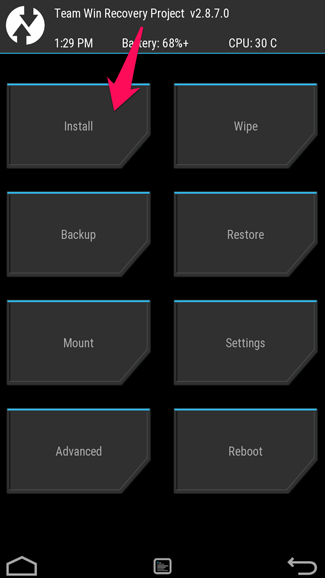
- Go back to the main screen and tap Install.
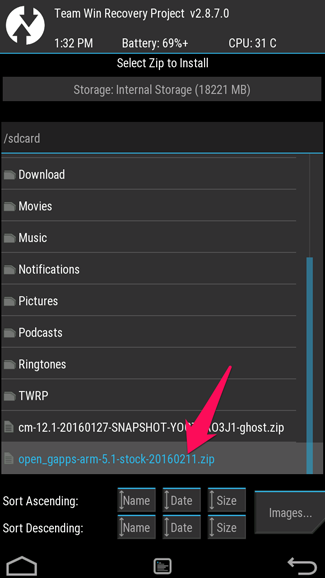
- Find the GApps ZIP and tap it.
- Swipe to confirm the flash and wait until it finishes.
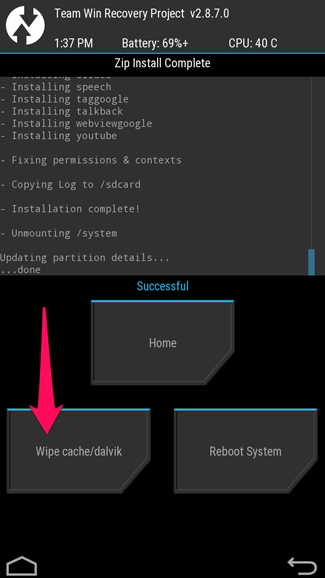
- Tap Wipe cache/dalvik, then swipe to confirm.
- Tap Reboot System. The first boot can take 5 to 10 minutes, so leave it alone.
That’s it. Sign in with your Google account during setup and the Play Store will be there.
If you’d rather push the ZIP from your computer, you can use ADB sideload instead. I covered that in my guide on how to sideload flashable ZIPs with TWRP.
How to flash GApps with Lineage Recovery
New LineageOS builds come with their own Lineage Recovery instead of TWRP. It doesn’t have a file browser, so you push the GApps ZIP from your computer.
- Install the LineageOS ZIP first, following the install guide for your device on the LineageOS wiki.
- When the ROM install finishes, stay in recovery. Don’t reboot yet.
- Tap Apply update, then Apply from ADB.
- On your computer, run this command from the folder that has the GApps ZIP:
adb sideload MindTheGapps-16.0.0-arm64.zip- Use your real file name. If the recovery warns that the signature can’t be verified, tap Yes to continue. That’s normal for GApps.
- When it’s done, go back and tap Reboot system now.
You need ADB on your computer for this. Here’s how to install ADB and Fastboot the official way.
Open GApps downloads for Android 11 to Android 5.1
Open GApps still hosts packages for older ROMs. Each link below opens the Open GApps download page with your Android version and the Nano package already picked. You can switch to another size there before you download.
| Android version | API level | ARM64 | ARM |
|---|---|---|---|
| Android 11 | 30 | ARM64 | ARM |
| Android 10 | 29 | ARM64 | ARM |
| Android 9 Pie | 28 | ARM64 | ARM |
| Android 8.1 Oreo | 27 | ARM64 | ARM |
| Android 8.0 Oreo | 26 | ARM64 | ARM |
| Android 7.1 Nougat | 25 | ARM64 | ARM |
| Android 7.0 Nougat | 24 | ARM64 | ARM |
| Android 6.0 Marshmallow | 23 | ARM64 | ARM |
| Android 5.1 Lollipop | 22 | ARM64 | ARM |
Open GApps for Android 11 was never fully finished, so you may run into small bugs. On an Android 11 ROM, MindTheGapps or NikGapps is the better pick.
Open GApps package sizes explained
Open GApps comes in several sizes. Smaller packages install only the basics, and you add the rest from the Play Store later.
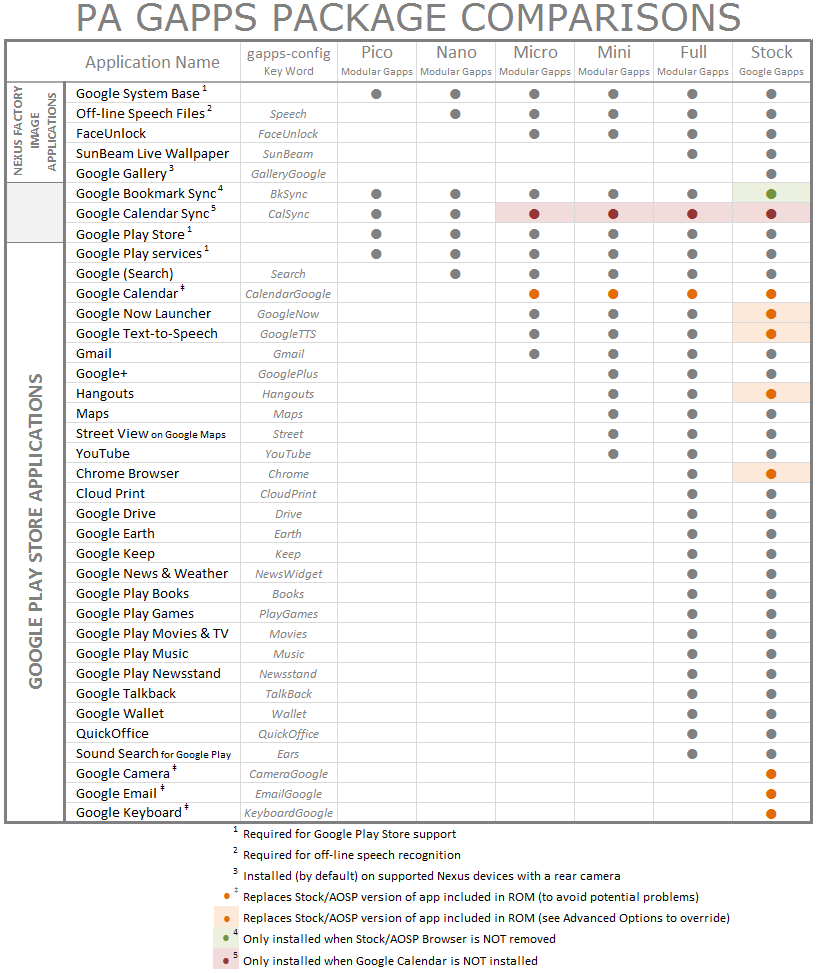
- Pico: the smallest. Play Store, Play services and the Google framework only.
- Nano: Pico plus Google Search features like Ok Google. This is what I’d pick for most people.
- Micro: adds Gmail, Google Calendar and Google Exchange services.
- Mini: adds apps like Google Maps, YouTube and Google Photos.
- Full and Stock: install nearly every Google app and replace some stock apps. They need a lot of free space on the system partition.
- Aroma: lets you pick apps in a menu during install. It doesn’t work on every recovery.
If a big package fails with an “insufficient storage space” error, your system partition is too small. Drop down to Nano or Pico.
FAQ
What does “Incompatible Android ROM detected” mean?
You downloaded GApps for a different Android version than your ROM. For example, Android 10 GApps on an Android 11 ROM. Check the ROM’s Android version and download the matching package.
Can I flash GApps after I already booted the ROM?
Usually not. Most ROMs need GApps flashed before the first boot. If you already booted without them, you’ll need to wipe data (factory reset) in recovery, then flash GApps and boot again.
Which GApps package should I download?
For Android 11 or newer, download MindTheGapps or NikGapps core. For Android 10 or older with Open GApps, Nano is the best balance of size and features.
Why do I get “Google Play services keeps stopping” after flashing?
That usually happens when the GApps version doesn’t match the ROM or you skipped the cache wipe. I listed every fix in my guide on the process com.google.process.gapps has stopped error.
Related guides
- How to install custom ROMs on Android using TWRP
- How to sideload flashable ZIPs with TWRP
- How to make a Nandroid backup and restore it
- How to fix “process com.google.process.gapps has stopped”
- How to enable Developer options, USB debugging and OEM unlock
- How to install ADB and Fastboot
That’s it. Match the Android version, pick ARM64 unless your phone is really old, and flash GApps before the first boot.
Still not sure which package fits your ROM? Leave a comment with your phone’s model number, the ROM name and its Android version, and I’ll tell you which GApps to grab.




hi
hope you are well
i used TWRP , first of all i have chines version, i want to know is there any English version of TWRP? i need link?
i am using andriod 6.0.1 and i downloaded nano version of Gapps but after 20 mins there is nothing, and then i downloaded Gapps micro version and its also ARM. not 64, bit still my phone got stuck on it.
what should i do?
I downloaded the zip of Gapps and two is installed in my mobile and tried to flash Gapps and it completed or not ? I can’t find that
And I want to flash lineage os Gapps how I do it please tell me
Download the right Gapps pack like ARM or ARM64
what version of gapps is for nvidia shield tablet k1 lte version
Download CPU Z app from the play store it will show you the processor
ARM64 – For 64-bit devices.
ARM – For 32-bit devices.
x86 – Intel smartphones like Zenfones