


Originally written by Monojit Dutta, updated by Dibyajyoti Kabi. First published August 4, 2017. Updated October 24, 2026.
To sideload a ZIP with TWRP, boot into TWRP, go to Advanced > ADB Sideload and swipe to start. Then run adb sideload filename.zip on your PC. TWRP installs the ZIP straight from the computer, so you never have to copy it to the phone first.
That’s handy when your phone won’t boot, the storage is encrypted, or you just wiped everything. I’ll also show you how to sideload an official OTA with stock recovery on Pixel and other phones, and how to fix the errors people hit most.
Key points
- ADB sideload sends a flashable ZIP from your PC to the phone’s recovery over a USB cable.
- You need ADB and Fastboot on your PC, a USB driver for the phone and a cable that carries data.
- In TWRP, the option is under Advanced > ADB Sideload. In stock recovery, it’s called Apply update from ADB.
- Samsung removed Apply update from ADB from stock recovery with One UI 8.5, so Galaxy phones need Odin for manual updates now.
- The progress stopping around 47% is usually fine. Check the phone screen before you assume it failed.
What is ADB sideload?
ADB sideload is a recovery mode feature that installs a ZIP file sent from your computer over USB. The phone doesn’t need to boot into Android, and the file doesn’t need to be on its storage. You run one command on the PC, and the recovery flashes the file as it arrives.
You’d use it to flash a custom ROM, GApps, Magisk or a mod ZIP in TWRP, or an official OTA update in stock recovery. It’s also the easiest way to rescue a phone that’s stuck in a bootloop with nothing useful left on its storage.
What do you need before you start?
You need a computer with ADB, the USB driver for your phone, a data cable and the ZIP file you want to flash. For TWRP, the bootloader has to be unlocked and TWRP installed. Charge the phone to at least 50% first.
- ADB on your PC. Get the official SDK Platform Tools from Google, or follow my guide on Minimal ADB and Fastboot for Windows.
- The USB driver for your phone. Mac and Linux don’t need one.
- TWRP installed for your exact model. The official TWRP devices list shows which phones have a build.
- The ZIP file, saved in your ADB folder so the command stays short.
- A backup. My guide on Nandroid backups shows how to back up the whole phone in TWRP first.
You don’t need USB debugging for sideload itself, since the phone is in recovery. You do need it if you want to boot into recovery with an adb command, so turn it on in Developer options while the phone still works.
How to sideload a ZIP file with TWRP
Here’s the full process. It works the same for ROMs, GApps, Magisk and any other TWRP flashable ZIP.
- Move the ZIP file into your ADB folder and give it a short name, like rom.zip.
- Boot the phone into TWRP. You can run adb reboot recovery if the phone still boots into Android, or use your phone’s button combo.
- Connect the phone to your PC with the USB cable.
- Open a command window in your ADB folder. On Windows 11, right-click inside the folder and choose Open in Terminal.
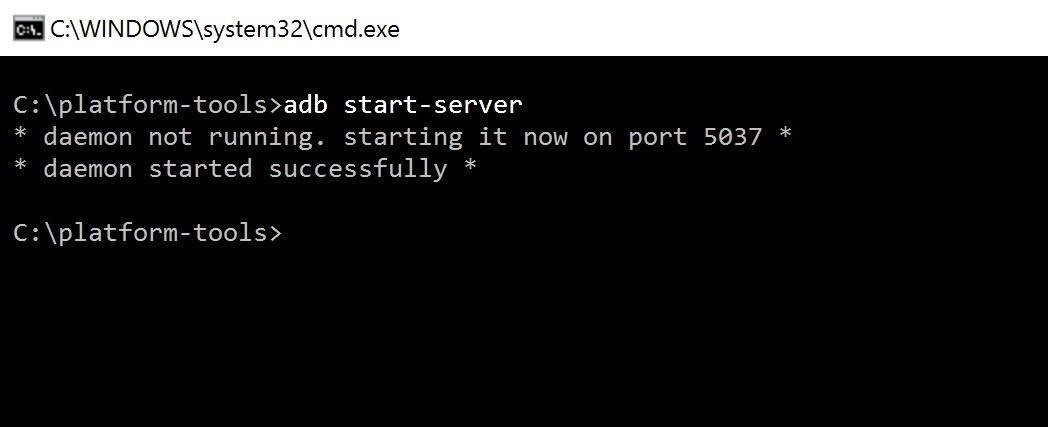
- Run adb start-server to make sure ADB is running.
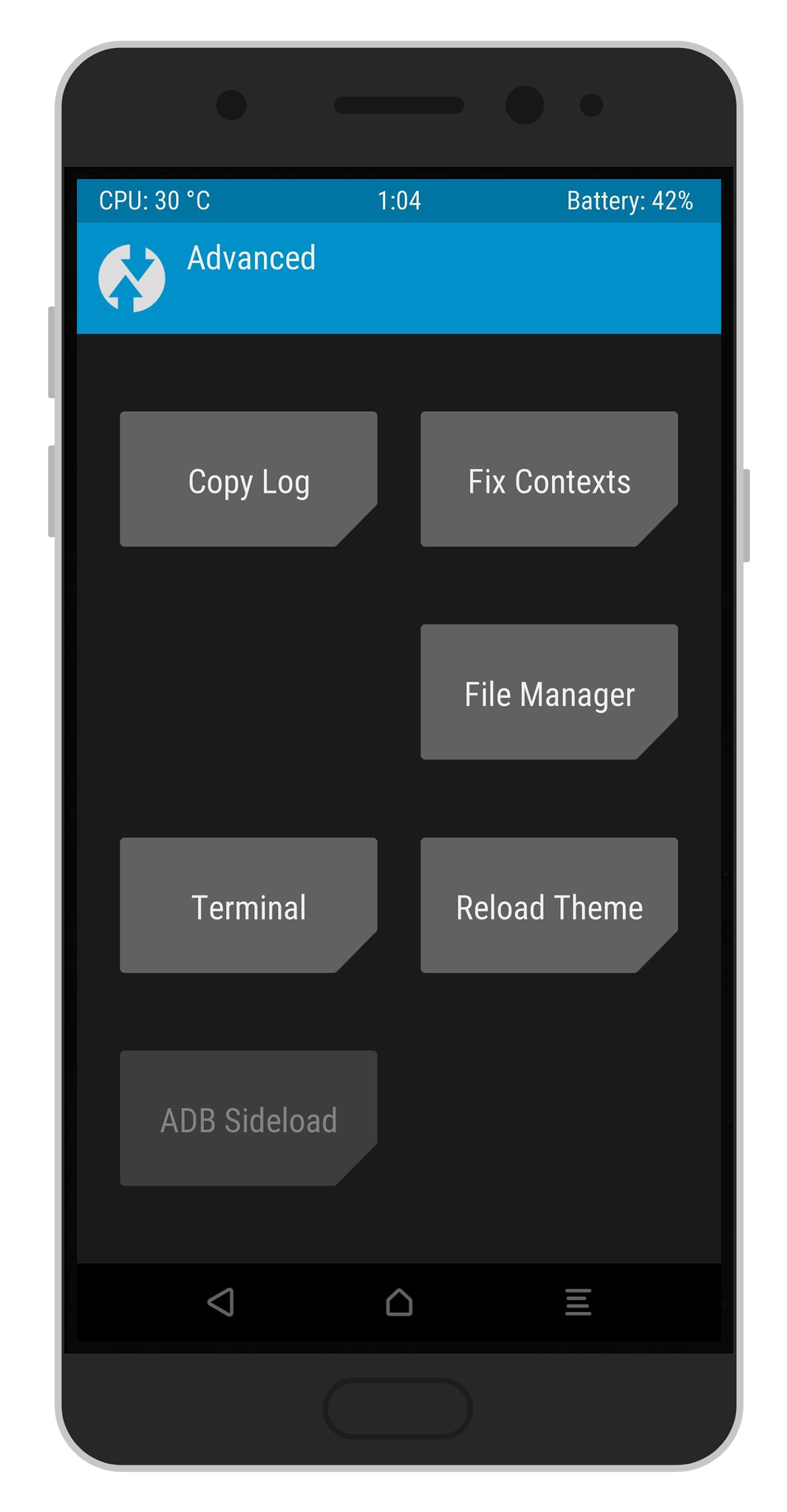
- On the phone, tap Advanced in TWRP, then tap ADB Sideload.
- Leave Wipe Dalvik Cache and Wipe Cache unticked unless the ROM’s install steps ask for them, then swipe to start sideload.
- On the PC, run the sideload command with your file name.
adb sideload rom.zip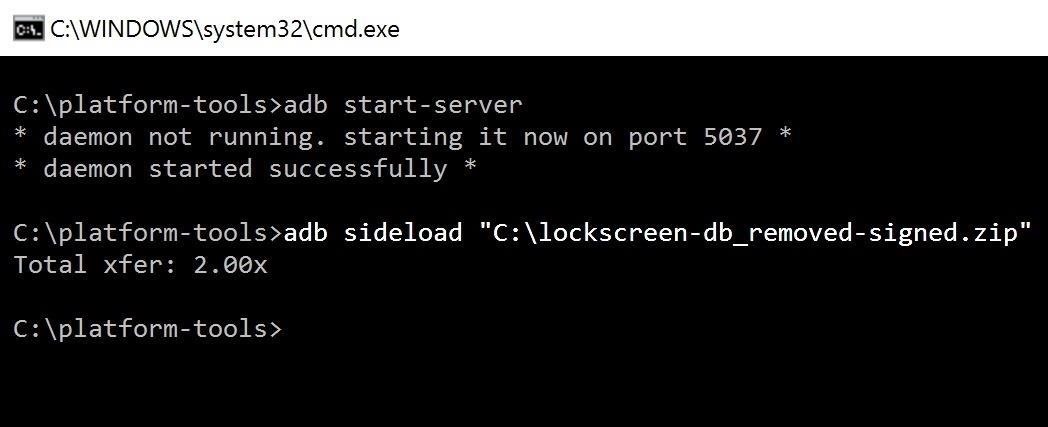
- Wait until TWRP says the install is done. Don’t touch the cable while it’s flashing.
- Flash any other ZIP the same way. Tap Back in TWRP, start ADB Sideload again and run the next command.
- Tap Reboot System when you’re finished.
In PowerShell, you may need to type .\adb in place of adb. If the ZIP lives in another folder, put the full path in quotes, like adb sideload “C:\Downloads\rom.zip”.
The TWRP ADB Sideload FAQ explains how the feature works and which ADB versions it needs.
How do I sideload an OTA with stock recovery?
On a Pixel and most other phones, boot into stock recovery, choose Apply update from ADB, then run adb sideload with the OTA file name on your PC. The phone checks the update’s signature and installs it, and your data stays where it is.
Here’s how it goes on a Google Pixel.
- Download the full OTA image for your exact model from Google’s OTA images page.
- Turn the phone off, then hold Power and Volume Down to open the bootloader.
- Use the volume keys to pick Recovery mode and press Power.
- When you see the “No command” screen, hold Power and tap Volume Up once.
- Choose Apply update from ADB.
- On the PC, run adb sideload with the OTA file name.
- When it finishes, choose Reboot system now.
Stock recovery only takes files signed by the phone maker. A custom ROM or a Magisk ZIP fails with a signature error there, so you need TWRP for those.
Can I sideload an update on a Samsung Galaxy phone?
Not anymore on One UI 8.5. Samsung cut the stock recovery menu down to Reboot system now, Wipe data/factory reset and Power off, and Apply update from ADB is gone, as 9to5Google reported in February 2026.
Galaxy phones on older One UI versions still have the option. On One UI 8.5, update with Settings > Software update > Download and install, or flash the firmware with Odin. My guide on how to flash stock Samsung firmware with Odin walks you through it.
Why does adb sideload stop at 47%?
The progress often stops around 47% on large ZIPs because of how ADB counts the transfer, not because the flash failed. Look at the phone screen. If recovery says the install finished, you’re done, even when the PC shows an error like “adb: failed to read command: Success”.
Only worry if the phone itself shows an error or the progress bar on the phone stops moving for more than 10 minutes. Then redownload the ZIP and try again with another cable.
How do I fix “no devices/emulators found”?
This error means ADB can’t see the phone in sideload mode. Start sideload on the phone first, then run the command. Run adb devices, and the phone should show up with the word sideload next to it. If it doesn’t, reinstall the USB driver and try another cable or port.
There’s more. On Windows, the driver sometimes installs for Android but not for recovery. Open Device Manager while the phone is in sideload mode, find the device with a yellow warning icon, and install the driver for it from there.
What does “cannot read” mean in adb sideload?
“adb: cannot read” means ADB can’t find the file you named. Check the spelling, including the .zip at the end, and make sure the file is in the folder your command window is open in. Windows hides file extensions by default, so a file that shows as rom.zip may really be rom.zip.zip.
Renaming the file to something short with no spaces fixes most of these.
FAQ
Does ADB sideload wipe my data?
No, sideload itself doesn’t wipe anything. A custom ROM may still need a factory reset when you switch from a different ROM, and TWRP’s wipe options do erase data if you tick them. An official OTA sideloaded in stock recovery keeps your apps and files.
Can I sideload GApps and Magisk after a ROM?
Yes. After the ROM finishes, go back to Advanced > ADB Sideload in TWRP, start it again and send the next ZIP. Flash GApps right after the ROM, before the first boot. My GApps guide explains which package to pick.
Do I need root to use ADB sideload?
No. Sideload runs in recovery, so root doesn’t matter. Stock recovery sideload works on a phone with a locked bootloader. TWRP needs an unlocked bootloader, but not root.
Is ADB sideload safer than copying the ZIP to the phone?
It does the same job. The main difference is that the file never touches the phone’s storage, which helps when the storage is encrypted, full or freshly wiped. A bad or wrong ZIP is just as risky either way, so always match the file to your exact model.
Related guides
- How to install custom ROMs with TWRP
- How to make a Nandroid backup in TWRP
- Download and install Minimal ADB and Fastboot
- Download GApps for custom ROMs
- How to enable Developer options, USB debugging and OEM unlock
That’s it. Start sideload on the phone, run one command on the PC, and watch the phone screen for the result.
Sideload not working on your phone? Leave a comment with your phone model (like SM-S938B or Pixel 9 Pro), the recovery you’re using and the exact error you see, and I’ll help you figure it out.




Always wondered how this worked, Thanks! BTW seems a hassle to me if I’m being honest. If you can connect your device to a PC then you can transfer your files too. Even through the TWRP Recovery using the ‘Mount’ feature
True but they do save you a lot of time when you need to flash multiple apps or are proficient using the CUI instead of the GUI based installation methods, especially if you’re a developer constantly testing out new things.